It’s certain that the Ruggeris lived in Codogno in the 1700’s and 1800’s. Codogno is a small town about 50 km south of Milan; about 20 km distance from Lodi and from Piacenza. In Codogno the Ruggeris had a house; it is the Palazzo Ruggeri, now called Vaghi, situated on Via Dante n. 6 (formerly Via Milano); Cesare, father of Paolo I, was born there and Cesare’s brother, Biagio, lived there in the second half of the 1800’s.


Biagio, first-born, architectural engineer, restored the house that boasts a beautiful gate embellished with columns and a vast inner courtyard. He married Teresa Bono and had two children: Paolino and Anna Maria Paoline, both perished at a young age. Biagio was the last Ruggeri to live in Codogno. A brother of Paolo Ruggeri (1800-1862), Francesco, married a Bignami and moved to Milan.
Two Ruggeri women, one named Rosa, the daughter of Ruggeri Biagio (1775-1845) married Cassoni, whose descendents live in Codogno; the other daughter, Elisabetta, daughter of Ruggeri Paolo (1800-1862) did not take a husband.
The family continued through Cesare’s children: Paolo I, Carlo, Teresa, and Giulia, but Paolo I and Carlo both embraced military careers and their work took them away from Codogno, where they never had occasion to return for any notable period of time.
So the house was sold and the family paintings and various objects were divided among the inheritors. Paolo I had two paintings which are now in the possession of the author: a Madonna with Child by Luini that according to tradition, passes from father to second-born son; behind the painting, on the wood, are signed the names of the Ruggeris that had it in their possession: Biagio Ruggeri, 1810-1845; Paolo Ruggeri, 1845-1862; Biagio Ruggeri, 1862-1880; Cesare Ruggeri, 1880-1908; Paolo Primo Ruggeri-Laderchi, 1908-1940; Cesare I Ruggeri-Laderchi, 1940. The other painting is simply a Madonna with child, St. John, and St. Joseph made in a remarkable Michelangelo-esque style. When this painting was added to Paolo Primo’s house, St. Joseph, who is bowing his head behind the Madonna in the upper left-hand corner of the canvas, was not visible as he was covered by a thick layer that came off when Paolo I decided to have the painting restored. To tell the truth, St. Joseph, angular and bearded, contrasts with the softness of the Madonna and this probably explains why one of the Ruggeri ancestors had made him disappear.


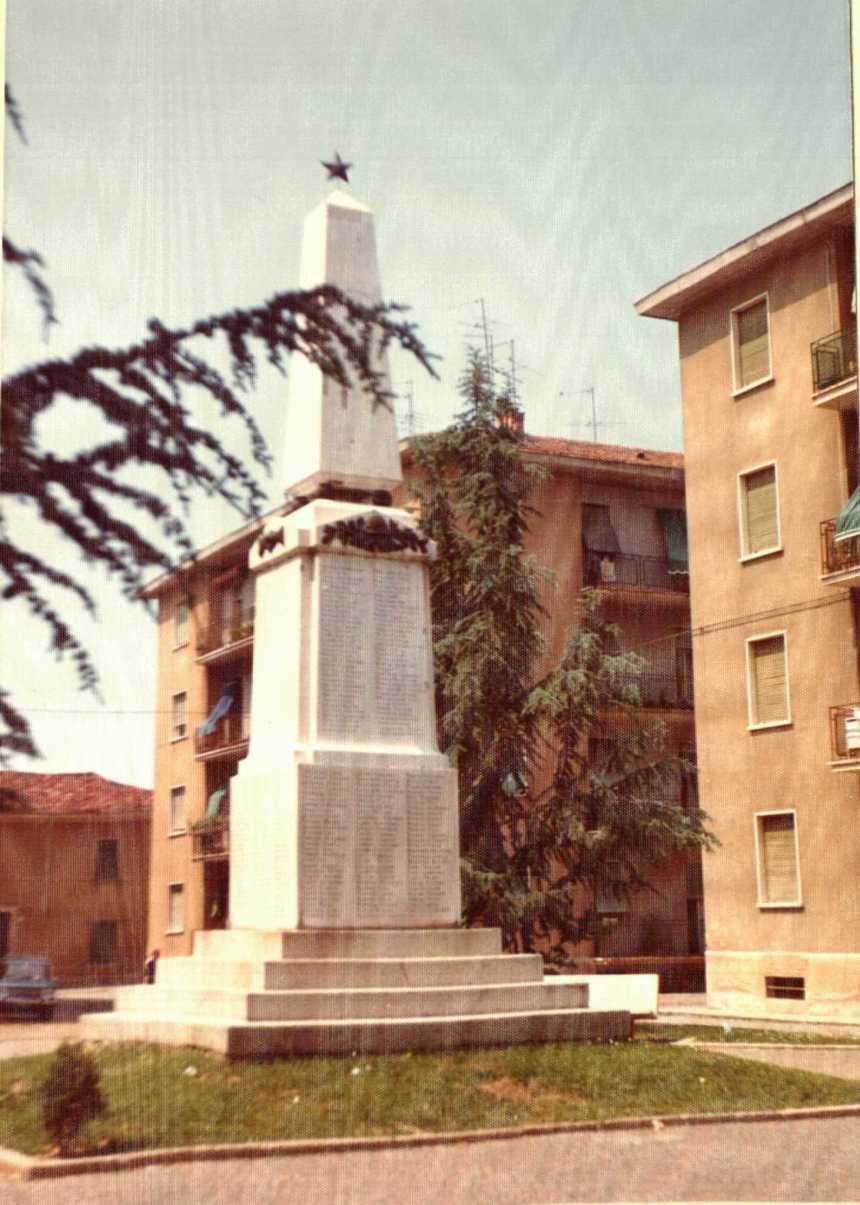
Cesare, the father of Paolo Primo, was a boy and then a man during the fortunate period in which began to be explored the possibility of Italy freeing itself from foreign rule, forming a free and united Italy under the Sabauda Dynasty. Codogno, so close to Piedmont, participated eagerly in the patriotic vicissitudes of the period and many of their sons ran to enlist in the Piedmont ranks. Biagio and Cesare Ruggeri were among these men even though doing so, for those who lived in Lombardy and were therefore under the administration of Austria, meant incurring the implacable repression that the Austrians exerted. A stele erected in Piazza Italia in Codogno records the 500 valorous Codognese who fought in the battles of the Revolution and Cesare Ruggere’s name appears there. In the cemetery of Codogno under the left portico as you walk in, there is a funereal monument to Biagio Ruggeri and his family members; it is a beautiful marble composition of a certain artistic value.
Actually, in Codogno there are no direct descendants of the Ruggeris. The Cassoni, Folli, and Cipri families descend from a common Grandmother, Rosa Ruggeri, sister of Ruggeri Paolo and therefore Aunt of Ruggeri Cesare.
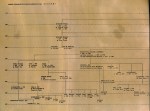
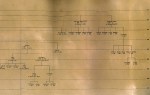
Carlo Ruggeri, brother of Paolo I, General of his division, an upright man and soldier, had only one daughter, Tina, who married a Parisi; Teresa, sister of Paolo I, married Bosi. (See the detailed genealogical tree). Giulia, the other sister, died in her twenties of influenza.
The Ruggeris, during the Codogno period, were among the exponents of that wealthy and cultured society; they were landowners and had, as has been shown, a palazzo in Codogno.
They were considered “nobles.” According to the story transmitted verbally, the family had its origin in France and called themselves Rosier, therefrom they passed into Liguria and italicized their surname to Rosieri, which finally became Ruggeri. The Ruggeri coat of arms — which forms the left side of the Ruggeri-Laderchi coat of arms — is “of blue, with a red cross, foreshortened and clearly visible, fringed in gold over an abyss, accompanied at the head and flanks by three stars, and over the severed head of a lion, all in gold.”
Another coat of arms entirely of blue, but with only three red roses, found among old family papers, appears to be that which belonged to the family when they went by Rosier.
 The Ruggeri-Laderchi Family