The Laderchis descend from the Malpigli family, well known in Bologna, in particular from Erro da Malpiglio who was Consul of Bologna in 1173. According to the “Blasone Bolognese” (Bologna Blazon) by Canedoli, the coat of arms of the Malpigli was “of blue with a stripe of gold” and is analogous to that of the Laderchis until around 1500, which was “of red with a silver-bordered, broken green score.”
Malpiglio was born in 1191 and lived during the period of the battles between Bologna, Imola, Faenza, and Ferrara. [He was a] brilliant knight known for his wisdom and valor. His birth city rewarded him the title Castellano and Feudal Landowner of the Castle of Laderchio and of the Derchia in val Senio. In fact there, at the confluence of the Sintria in the Senio, set close in the Riolo and not far from the Castel Bolognese, can still be found ruins close to which there is a farmhouse called “Laderchia”. In the booklet “Background of the Churches of the Riolo Terme Parish,” we find written: “In 1517 Laderchio constituted a vast possession of 300 tornature [a local measuring standard] of earth, over which stood four farmhouses, the principal of which was known as Voltrignano — alias Laderchi Rioli. A sale of the land beneath Felexedo, now called Feliceto, on September 20 1513 allows us to precisely pinpoint the site of the ancient Castle of Laderchio, corresponding to the farm house still called “Laderchia”.
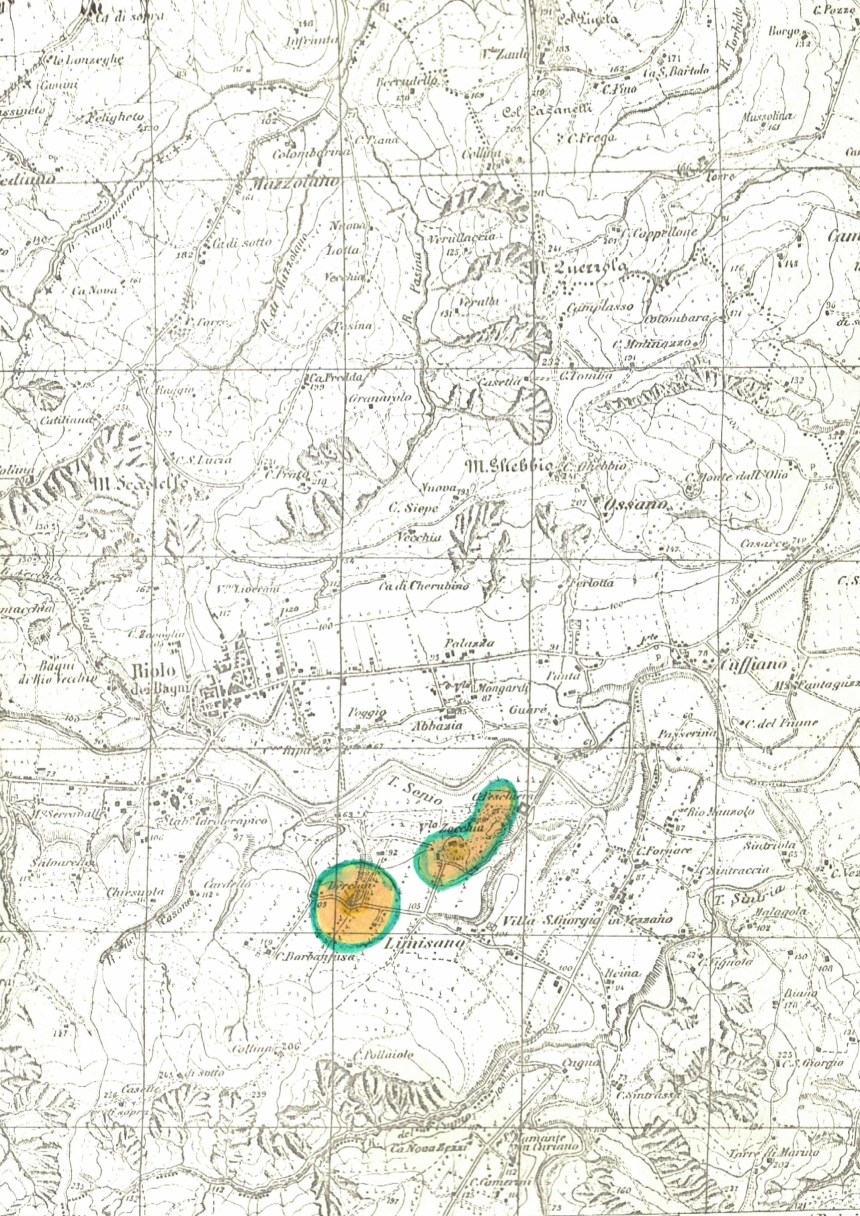
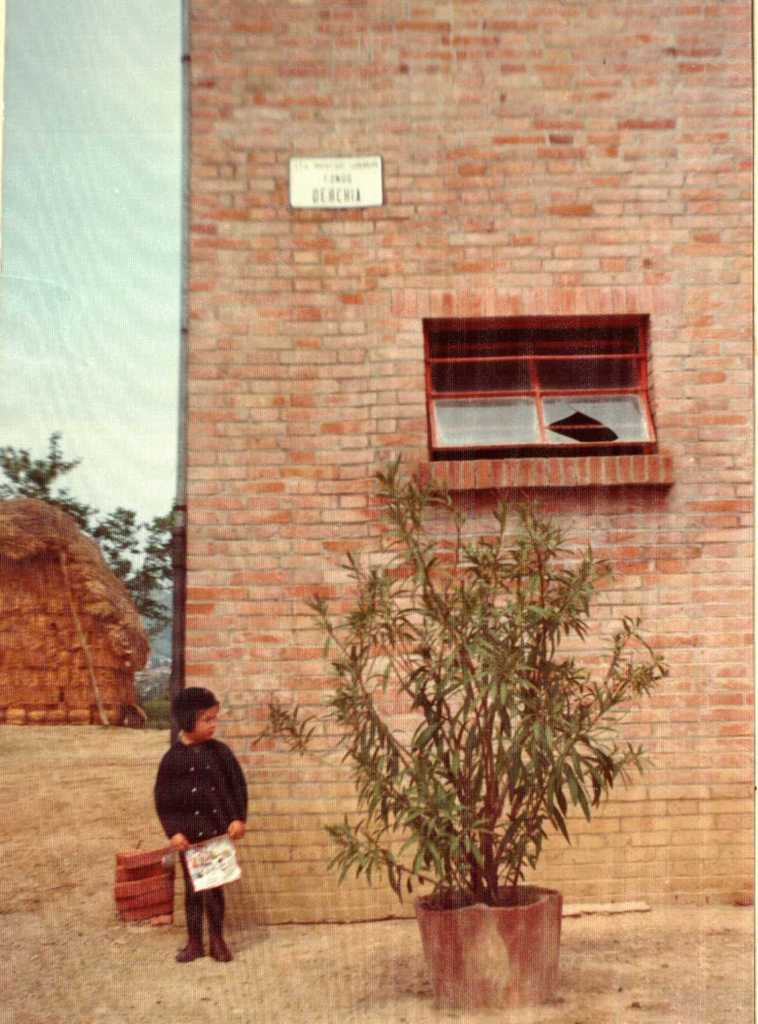
The aforesaid booklet continues, “Before Riolo there is news from the Commune of Laderchio, a place on the right bank of the Senio (the actual territory of Limisano from which a farmhouse carries today the name of ‘Laderchia’). The first records of Laderchio arise at the beginning of the 12th century. There was a castle and it had its nobles and Cattani. As a villa or as a community it was in the 13th-14th centuries one of the most populated of the Imolese. Its curia included the churches of St. Pietro in Sala, etc.”
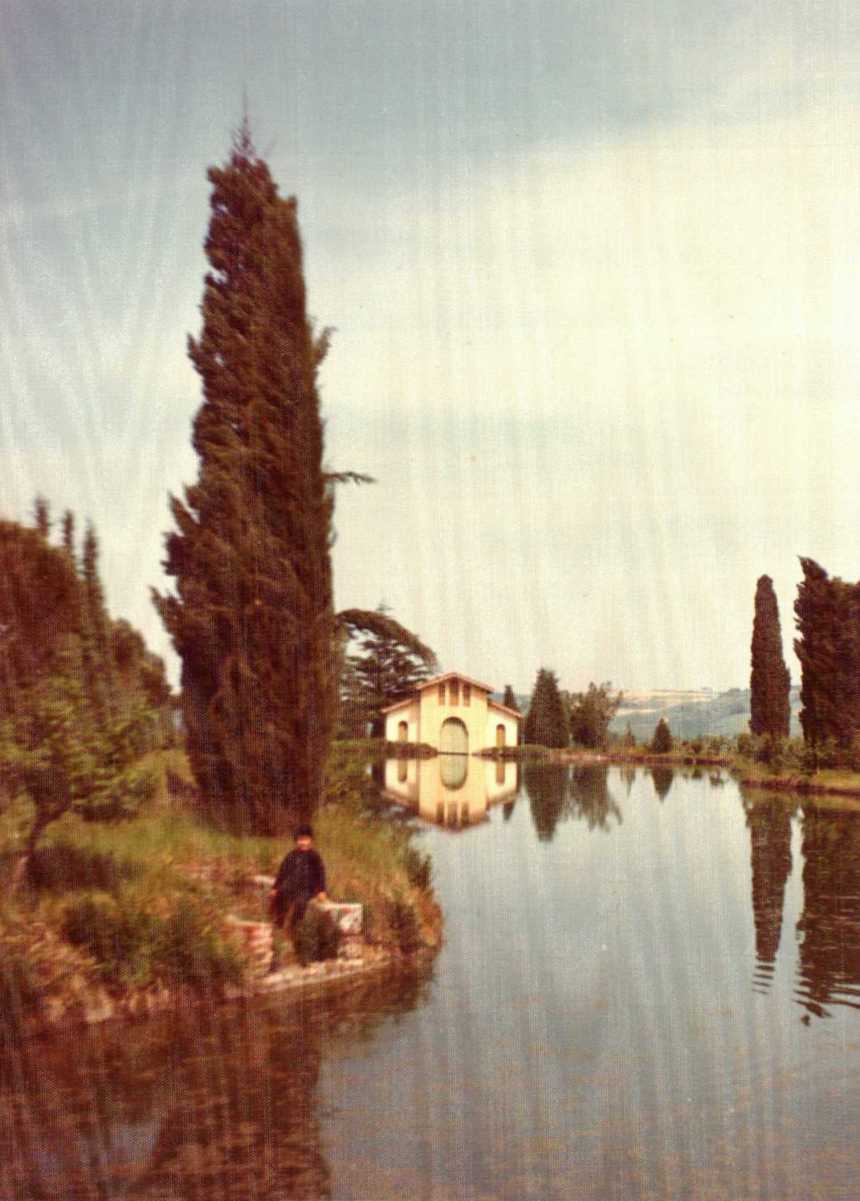
Not far from the aforementioned farmhouse is found the Villa Zacchia and in its park lie the ruins of the Tower of Laderchio still more flattened because during the winter of 1944-1945 the line between the Germans and the Anglo-American forces passed through there and it was subjected to daily bombardments. A few meters from these ruins a noble house still stands, along with a small church, both from the early 1800’s; among ancient oaks, cypress, and precious trees along with a small pond artificially dug into the summit of a ridge, the pond being relatively characteristic because its banks slope down on all sides, deepening with the slope of the ridge. At one end of the pond there is a construction that acts as a dock on the lower level, while on the upper level it has some rooms that allow for a more prolonged sojourn in that delicious place.
This property which, along with much of the surrounding land, belonged to the Laderchi, was sold to the Marchesi Zacchia, who also purchased the Palazzo Laderchi in Faenza. I will speak of this later. They are known as “Villa Zacchia” and as “Palazzo Zacchia, formerly Laderchi”.
Recently the Zacchias sold the Villa to the Schiavo family native to Bologna. Some time ago the Palazzo Laderchi in Faenza was acquired by the State, where after being assigned to the sub-prefecture, which was then abolished, it was made a property of the Commune of Faenza. But returning to Malpiglio, who was already a feudal master since 1219, and owned a tower, palazzo, and windmill. There he defended the Bolognese territory against the incursions of the Faentines.


Il Tonduzzi, Faenza historian, on page 585, narrates, “In the year of 1250 for the first time the Faentines went to besiege, arms in hand, the Castello di Laderchio that the Bolognese kept under their jurisdiction, and wrought great damage with fires, devastation, ruins.” Concerning this Castello, Emilio Rossetti, in his book La Romagna, writes, “Laderchi [Tower], ancient Faenza Castle built by the Manfredi, who gave or took the name of the Laderchi family of Faenza. It is found near the confluence of the Sintria and the Senio in front of the Abbey of Riolo.” Today it is possible to discard the hypothesis that the Laderchi gave their name to the Castello; rather, it probably happened that the castle was called La Derchia from which came Laderchia and then Laderchi, adopted a while later when the family lost its medieval character.
In fact, Gens Laderchia is written at the base of an ancient genealogical family tree, made of laid paper on parchment in the figure of a great oak that stands on hilly terrain on which the ruins of a castle stand out. Near the foot of the oak a warrior is seated and completely armed, near which is written Marpilius Ladus MCCXIX. The coat of arms on Marpilius’s shield is of three colors and depicted thus: of red with a broken green line edged in silver. In the same document, near the name Camillo 2/VII Conte di Albinea (1588-1638) there is another coat of arms with the same tri-color signature, but it is also quartered with two eagles, the head of only one being crowned.
Above the coat of arms sits the crown in the ancient style of the count.
This family tree ended up in the hands of Giovanni Battista 11/XI, born in 1879 and died around 1930, the last descendant of his branch, seeing as he had no children, and is probably now actually in the hands of the descendants of his sister Rita, who married the professor Ferroni in the early 1900’s, who now live in Florence.
The Laderchio Castle remained until 1376 in Bologna’s zone of attraction, and thereafter in that of Faenza. Tonduzzi writes on page 438 of his History: “September 18, 1376. The Laderchio Castle standing in the territory of Imola, but often comes under the dominion of the Bolognese, the Lord of Faenza having sworn faithfulness to Astorgio Manfredi.
The Laderchis having thus entered the orbit of the Manfredis, they were most faithful to this family until its extinction, settled in Faenza and for a long time maintained possession of La Derchia, which was sold, as has already been seen, in 1558 by the guardians of Giacomo 8/I Laderchi, because “among the many goods that the little Giacomo possesses, these were among the most distant from the city and there the most uncomfortable to administrate.” Which decision, while it may have been a wise move commercially, was however a grave error since that site memorialized the origins of the Laderchi family, and there was still in those times a Laderchi Tower and a church called St. Peter’s in Laderchio.
 The Ruggeri-Laderchi Family